|
The discerning traveler looking for eco-adventure trips to view endangered animals and experience indigenous cultures need look no further than Borneo, the world�s third largest island. 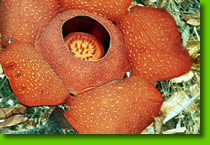 Straddling the equator, north of Sumatra, northwest of Australia, east of Singapore and south of the Philippines, Borneo is shared by three countries, Malaysia, Indonesia and Brunei. The Malaysian part (known as East Malaysia) is divided into two states: Sarawak and Sabah. Sarawak, where our tour takes place, is Malaysia�s largest state. It is home to amazing diversity in flora and fauna as well as 27 diverse indigenous cultures. Malaysia can lay claim to the world�s oldest rainforests, the world�s largest flower (the Rafflesia) which can open as wide as three feet! In addition, world's largest cave system can be found at Mulu National Park, a World Heritage Site. West Malaysia is found on the peninsula between Thailand and Singapore. View map of Borneo. Straddling the equator, north of Sumatra, northwest of Australia, east of Singapore and south of the Philippines, Borneo is shared by three countries, Malaysia, Indonesia and Brunei. The Malaysian part (known as East Malaysia) is divided into two states: Sarawak and Sabah. Sarawak, where our tour takes place, is Malaysia�s largest state. It is home to amazing diversity in flora and fauna as well as 27 diverse indigenous cultures. Malaysia can lay claim to the world�s oldest rainforests, the world�s largest flower (the Rafflesia) which can open as wide as three feet! In addition, world's largest cave system can be found at Mulu National Park, a World Heritage Site. West Malaysia is found on the peninsula between Thailand and Singapore. View map of Borneo.
Visas are not required for US citizens, and there are no particular immunizations required. Kuching, the capital and our home base, is a cosmopolitan city with a warm tropical climate. You can drink the water from the tap in the city. There is a low crime rate, a good health system, modern infrastructure and absence of natural disasters. No earthquakes, tidal waves or tsunamis! The population is predominately  Chinese and Malay, and although Malay is the National Language, English is widely spoken. Malaysians are known for their friendliness, even strangers on the street will make you feel welcome. Representatives of almost all of Sarawak�s indigenous cultures are found here, some living very modern cosmopolitan lifestyles, and others living in rural areas in the longhouse communities and in the rainforest. Chinese and Malay, and although Malay is the National Language, English is widely spoken. Malaysians are known for their friendliness, even strangers on the street will make you feel welcome. Representatives of almost all of Sarawak�s indigenous cultures are found here, some living very modern cosmopolitan lifestyles, and others living in rural areas in the longhouse communities and in the rainforest.
Hundreds of Iban and Bidayuh longhouses, within easy traveling distance, make it easy to experience the indigenous cultures. The beautiful resort area of Damai Beach is on the Santubong Peninsula. Many trails for jungle trekking can be found in the many National Parks surprisingly close to this cosmopolitan city with its 5 star hotels and upscale shopping malls! You can go caving, snorkeling, scuba diving or relax on the beach.
It is a short trip to Bako National Park, home of the rare Proboscis Monkey, one of the world's endangered animals. Semenggoh Wildlife Rehabilitation Centre, where you can have close encounters with the threatened semi-wild orang-utans, another of our endangered animals, is also a short drive out of town. Kuching is an ideal base from which to go exploring. You can have the best of both worlds� authentic jungle eco-adventure trips by day and relaxing in a luxury hotel at night.
INDIGENOUS CULTURES
The largest of the indigenous cultures are from former head-hunting tribes, the Ibans (formerly known as Sea Dayaks), and the Bidayuhs (known as Land Dayaks). Additionally there are the Melanus from the coastal areas, the Orang Ulu, (�upriver� people). Some of the smaller indigenous cultures are the Kayan, Kenyah, Kelabit, Berawan, and also the Penans (the nomadic people of the rainforest).
Because of this cultural diversity, Kuching is an ideal place for visiting these tribes in their longhouses, and for purchasing native handicrafts from each of the many indigenous cultures. An enormous variety of goods are on display in the craft shops lining the picturesque waterfront.
ENDANGERED ANIMALS
Proboscis Monkeys
These unique primates live only in Borneo. Their habitat is increasingly threatened by logging, farming, settlements, swamp drainage, mining, hunting, shrimp farming and fire. With possibly fewer than 8,000 remaining, the proboscis monkeys are considered endangered animals. They forage for food in coastal mangrove and swamp forests. Proboscis monkeys can be identified by their huge, pendulous noses. They are specialized plant-eaters and appear pot-bellied due to a �double chambered� stomach which helps digest the seeds, leaves and green fruits which comprise their diets. They are quite organized. The basic family unit is comprised of an adult male with several females and their offspring. Young males are kicked out of the harem groups at an early age, forming all-male groups until reaching maturity, at which time they form their own harems.
Learn more ...
Orang-Utans
They are one of the �great apes� that are man�s closest relatives and are high on the list of endangered animals. Some authorities believe they the situation is so serious that the orang-utan is threatened by extinction within the next 10-20 years. They are only native to the islands of Borneo and Sumatra. The Semenggoh Wildlife Rehabilitation Centre in Sarawak, and Sepilok in Sabah are the 2 such centers found in Malaysian Borneo. They are populated with ex-captive orang-utans... i.e. orang-utans that have been taken illegally as pets and eventually confiscated from their owners. At these centers, they are first kept in isolation until cured of injuries and diseases developed during captivity. Then they are taught the survival skills they missed out on without their mother�s guidance. Gradually they are reintroduced to a semi-wild environment, where they roam free in the rainforest, and are free to come in to a feeding platform twice a day. The female orang-utan only bears one baby at a time and only once every 6- 8 years. In addition to poaching and habitat destruction, this is one of reasons behind its scarcity. The baby is totally dependant on its mother for the first 6 years of its life, clinging to her body for much of this period. The only way a poacher can capture an infant orang-utan is to kill the mother and then remove the clinging infant. These orphans need to be taught jungle survival skills from their mothers, and when separated like this they are unable to survive on their own in the wild. They need to be taught everything... from which fruits they can eat, to how to climb trees. Adult orang-utans are large solitary primates, requiring a huge expanse of rainforest for obtaining their diet, consisting mainly of fruits.
Learn more ...
|





)